
Best Kitchen Designers in Philadelphia: Crafting Functional Luxury Spaces
Introduction
Kitchen renovation in Philadelphia has become a high-decision process. This is where design, material selection as well as installation must work in sync. Homeowners are no longer approaching kitchens as isolated aesthetic upgrades. Instead they are treating them as long-term investments. Especially in functionality as well as durability.
Within this shift kitchen designers in Philadelphia & remodeling professionals play a central role in translating ideas into executable plans. The most effective outcomes come from teams that can manage both the planning phase & the on-site execution. This ensures that design intent is realistically implemented… within the constraints of the home.
In Philadelphia where housing styles vary significantly this coordination becomes even more important.
What Defines a Top Kitchen Designer in Philadelphia
A top kitchen designer in Philadelphia is defined less by visual creativity alone and more by their ability to deliver buildable solutions.
At the core strong kitchen design involves understanding how people use space. This includes movement between cooking, cleaning and storage zones. As well as ensuring that the layout supports efficiency during daily use. A well-designed kitchen reduces friction, improves accessibility & creates a natural workflow.
However design quality alone is not enough. Execution feasibility is equally important. Many design concepts fail during renovation… because they do not account for structural limitations, material constraints or installation requirements.
This is where integrated remodeling teams add value. Companies that combine design consultation with installation services are better positioned to ensure that the final result aligns with the original plan.
Local expertise is also a major factor. Philadelphia homes often come with unique architectural layouts that require adaptive planning rather than standardized solutions. A strong kitchen design approach considers these constraints from the beginning.
Full-Service Kitchen Design and Remodeling Approach
Modern kitchen renovation projects increasingly follow a full-service structure where multiple stages are handled… within a single coordinated system.
This typically includes an initial consultation phase where homeowners discuss layout ideas, functionality needs & general style preferences. From there the project moves into structured planning where design direction is refined and aligned with available space.
Material selection is a key part of this process. Homeowners often choose from a range of countertops, cabinetry options, tile surfaces and flooring materials. Being able to physically view & compare these materials is especially valuable. For this reason many remodeling providers operate showrooms where materials can be evaluated in person… before final decisions are made.
Once selections are finalized the project transitions into installation planning. This includes scheduling, coordination of trades, and ensuring that all elements like cabinets, countertops, and tile work are aligned within the same execution timeline.
The primary advantage of this full-service approach is consistency. When design, sourcing & installation are connected there is less risk of miscommunication or misalignment between planning & execution.
Key Elements of Functional Luxury Kitchen Design
Functional luxury in kitchen design is achieved through a balance of practicality & refined material selection. It is not about excessive detailing… but about intentional decision-making.
One of the most important elements is layout efficiency. A well-planned kitchen reduces unnecessary movement between key zones. Cooking, preparation & storage areas are arranged in a way that supports natural workflow.
Material selection also plays a major role. Surfaces must be chosen based on both appearance & durability. Kitchens experience constant use… so materials need to withstand heat, moisture as well as physical wear over time.
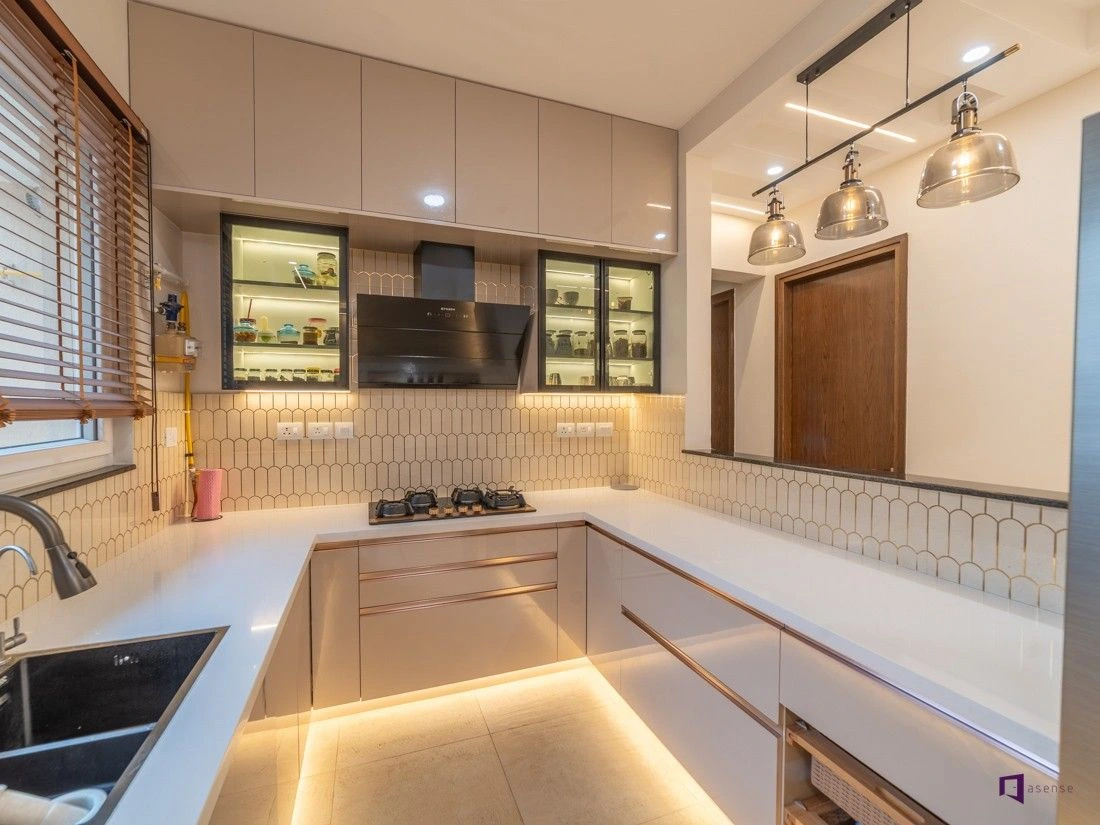
Coordination between elements is equally important. Cabinets, countertops, backsplash tile & flooring should not be treated as separate design decisions. Instead they must function as a unified system. When these elements are aligned the kitchen feels cohesive… rather than fragmented.
Lighting, while often overlooked, also contributes to functional design. Proper lighting improves visibility during cooking & enhances the appearance of surface materials.
Countertops as a Core Design Foundation
Countertops are one of the most important components in any kitchen renovation. Because they serve both functional and visual roles.
From a functional perspective countertops are the primary workspace in the kitchen and are used for food preparation, appliance placement and general daily activity so as a result they must be durable and easy to maintain and also resistant to common kitchen conditions such as heat and moisture.
Common materials used in countertop installation include quartz, granite, and marble. Quartz is widely chosen for its durability and low maintenance requirements. Granite offers a natural stone appearance with strong resistance to heat and wear. Marble is often selected for its visual appeal… particularly in kitchens where aesthetics are a priority.
However material selection alone is not enough. Proper integration with cabinetry, backsplash & overall layout is essential. Countertops must be measured, fabricated, and installed with precision to ensure proper fit as well as alignment.
Professional installation helps prevent issues such as uneven seams, poor sealing, or misalignment. All of this can affect both appearance as well as long-term durability.
Bathroom and Kitchen Remodeling Synergy
In many residential projects kitchen & bathroom renovations are handled together due to shared design principles & material considerations.
Both spaces rely heavily on surfaces such as tile, stone and cabinetry. Coordinating these elements across multiple rooms helps create a more consistent design language throughout the home.
When managed under a single remodeling approach this also improves operational efficiency. Scheduling becomes more streamlined, material sourcing is more organized and workmanship standards remain consistent across different areas of the home.
This synergy is particularly valuable in full-home renovation projects where multiple spaces are being upgraded at the same time.
Financing Options for Large-Scale Kitchen Projects
Kitchen remodeling can represent a significant financial commitment. Especially when it involves full layout changes and premium materials or maybe a complete installation service. So this isn’t always manageable for everyone to spend on it once. That’s why there are financing opinions too offered by some remodeling providers. These allow homeowners to “distribute” renovation costs over time… rather than covering the full expense upfront.
Conclusion
Kitchen design has moved toward a more integrated & structured approach. One where planning, materials, and installation are closely connected. Successful renovations depend on how well these elements are coordinated throughout the project lifecycle.
Countertops, cabinetry, tile, and flooring all contribute to the final outcome. But their value is maximized only when they are designed & installed as part of a unified system.
When executed properly, kitchen remodeling is not just a visual upgrade. It becomes a long-term improvement in durability and overall home value. The most effective projects are those that combine thoughtful planning with precise execution, supported by a kitchen designer in Philadephia who manages the entire process from start to finish.
FAQ Section
What does a kitchen remodeling project usually include?
This typically includes design consultation, material selection, cabinetry installation, countertop installation, tile work, flooring & final finishing.
Why is professional installation important for countertops?
Professional installation ensures accurate measurement and proper alignment. And also correct sealing which improves durability & reduces long-term maintenance issues.
Can homeowners see materials before choosing them?
Yes, many remodeling providers offer showroom access where homeowners can view & compare materials before making final selections.