
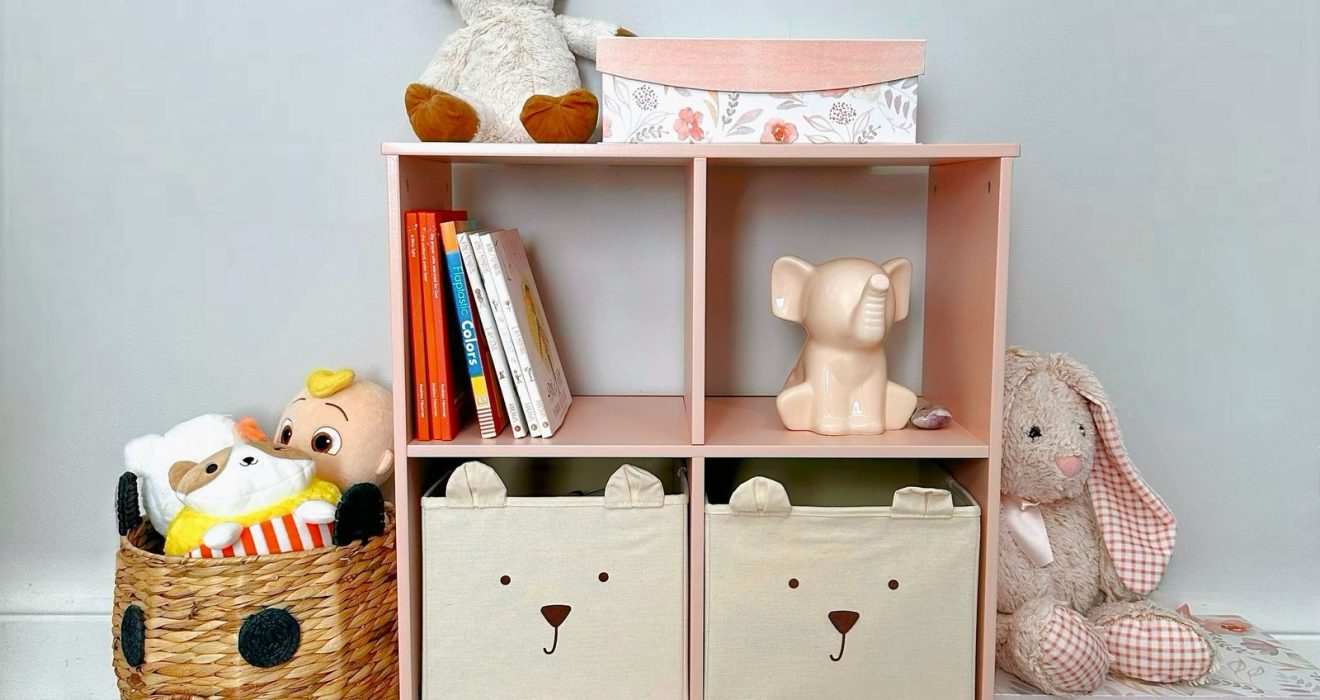
Toy Rotation Storage Ideas for Keeping Play Spaces Calm
Toy rotation reduces the number of toys available at one time while keeping the rest stored out of the active play area. Instead of displaying every puzzle, vehicle, stuffed animal, and building set together, families periodically swap a smaller selection in and out.
This approach can make cleanup faster and give familiar toys renewed attention without requiring a larger playroom.
Start With Fewer Toys Than You Think
A rotation system works best when the active selection leaves visible empty space. If every basket and shelf remains packed, the room may look almost the same as it did before.
Begin by removing duplicate, outgrown, broken, or rarely used items. Broader household storage inspiration often points toward the same lesson: better organization starts by controlling volume rather than buying containers first.
Observe What Actually Gets Played With
Keep toys that support different types of play rather than choosing only by size or appearance. One rotation might include building materials, pretend-play items, a puzzle, vehicles, books, and a creative activity.
Watch what children repeatedly choose. That information makes the next rotation easier to plan.
Store Off-Rotation Toys Out of Sight
Toys waiting for their next turn should be stored somewhere children don’t constantly browse through them. A closet shelf, labeled tote, storage room, or secured cabinet can work.
Families looking at organized property spaces may find it useful to treat rotation storage as reserve inventory rather than part of the everyday play zone.
| Toy Group | Active Storage | Rotation Storage |
|---|---|---|
| Building toys | Low bin | Labeled tote |
| Pretend play | Open basket | Closet container |
| Puzzles | Small shelf | Flat storage box |
| Vehicles | Floor basket | Covered bin |
Rotate by Interest, Not a Strict Calendar
Some families change toys weekly, while others wait several weeks. A fixed schedule isn’t necessary if the current selection is still being used well.
Rotate when interest noticeably declines, when the room becomes difficult to reset, or when a different developmental interest becomes obvious. Thinking about family-friendly environments can help keep the focus on how the space functions rather than how often the bins are swapped.
You also don’t need to change everything. Keeping a favorite toy available while rotating several others can make transitions easier.
Give Active Toys Breathing Room
A calm playroom doesn’t require empty shelves, but some open space makes individual choices easier to notice. Children may engage more deeply when they aren’t visually competing with dozens of alternatives.
Leave room around larger toys and avoid stacking several containers in front of one another. The easier each item is to see and return, the more useful the rotation becomes.
Where Toy Rotation Can Go Wrong
Rotation doesn’t help much if stored toys are simply moved into messy piles elsewhere. Off-rotation storage still needs labels and clear categories so adults can find complete sets quickly.
Another mistake is removing toys children are deeply engaged with simply because a calendar says it’s time. Rotation should respond to play patterns, not interrupt them unnecessarily. The objective is manageable choice, not constant novelty.
Frequently Asked Questions
How many toys should stay out during a rotation?
There is no universal number. Keep enough variety for different kinds of play while leaving storage comfortably below capacity. If cleanup regularly feels overwhelming, the active selection may still be too large.
How often should toys be rotated?
Rotate them when children lose interest or the available selection stops working well. Some households change items every week or two, while others use a much looser schedule.
Should favorite toys be included in rotation?
They don’t have to be. Comfort items and heavily used favorites can remain available while less-used toys rotate around them. A flexible system usually works better than an all-or-nothing rule.
Use Rotation to Control Volume
Toy rotation is most useful as a space-management tool, not a complicated parenting project. Store fewer items in the active area, keep reserve toys organized, and watch how children interact with what remains.
A room can feel calmer without becoming sparse. Often, the biggest improvement comes from giving each visible toy enough space to be noticed, played with, and returned easily.