
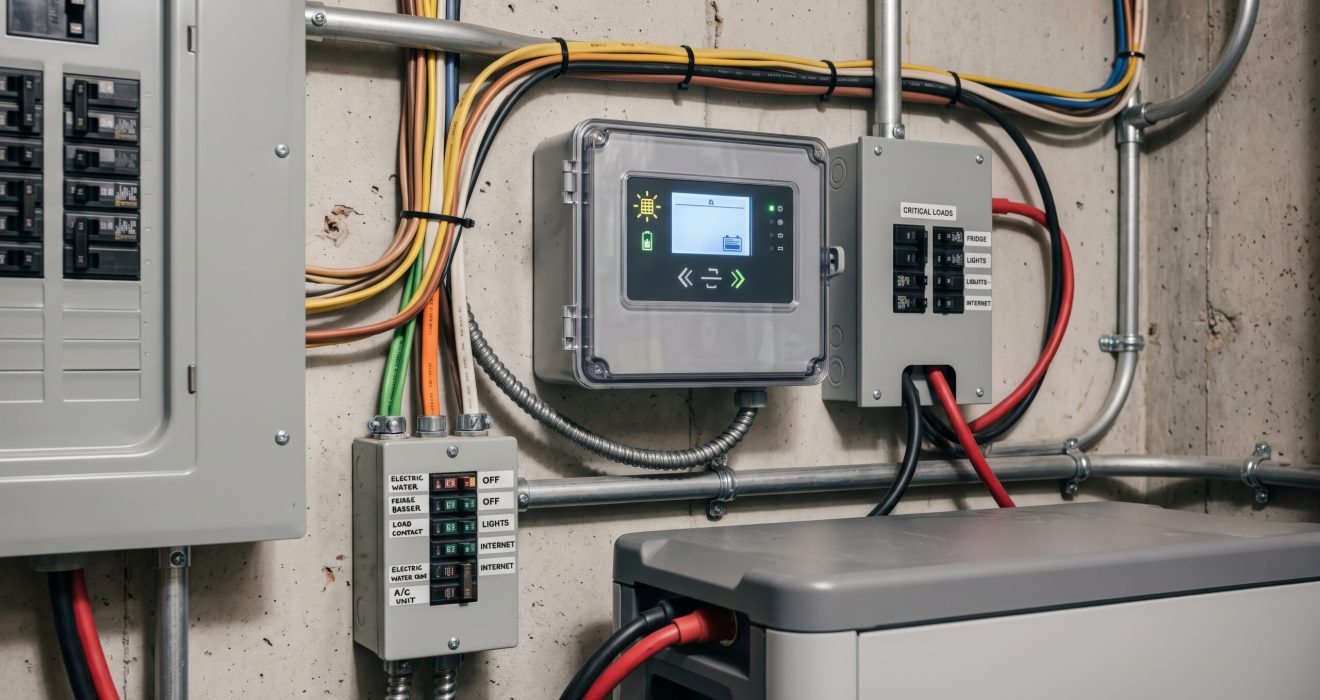
Battery Backup Ideas for Essential Household Circuits
Battery backup systems can keep selected household functions running without requiring a generator to start immediately. The key is deciding which circuits are genuinely essential and matching those loads to a battery system with suitable power and energy capacity.
Trying to back up an entire home can increase cost quickly. A focused essential-circuit plan is often easier to manage.
Separate Essential Loads From Convenient Loads
Start by identifying what the household truly needs during an outage. Refrigeration, communication equipment, selected lighting, security equipment, heating controls, and certain pumps may deserve priority.
The physical location of those loads matters too. Reviewing home improvement concepts while mapping circuits can reveal whether frequently used rooms already have conveniently grouped outlets or whether electrical changes may be worthwhile.
Think in Hours, Not Only Watts
Power rating describes how much equipment can run at one time, while usable energy affects how long the battery can support those loads. Both matter.
A smaller essential load can often run longer than several high-demand appliances operating together.
Create a Dedicated Essential-Load Strategy
Some battery systems can be configured to supply a selected group of circuits through dedicated equipment. This helps prevent nonessential appliances from consuming stored energy during an outage.
A clearly organized home layout makes those priorities easier to understand. Ideas from interior organization guides can also encourage better placement of routers, charging stations, task lighting, and other devices that may need dependable backup power.
| Possible Load | Backup Priority | Planning Concern |
|---|---|---|
| Refrigerator | Often high | Cycling compressor load |
| Router | Often high | Communication continuity |
| Selected lighting | High | Keep number of circuits limited |
| Large electric appliance | Usually lower | Heavy energy demand |
Give Communication Equipment Its Own Plan
Internet equipment uses far less power than many large household appliances, yet keeping it running may have a major practical benefit. A modem, router, network switch, and phone-charging location can therefore be sensible backup targets.
Centralizing smaller electronics in an organized area inspired by comfortable home planning can reduce cable clutter and make it easier to understand which devices depend on the backup system.
Consider How the Battery Will Be Recharged
A battery is only a stored supply of energy. Once discharged, it needs another source of electricity.
Depending on the system, charging may come from normal utility power, solar equipment, or another compatible source. Homeowners considering solar-plus-storage should make sure the inverter, battery, disconnects, electrical panel, and any selected backup circuits are designed to work together.
Where Battery Backup Plans Go Wrong
Oversizing the list of backed-up circuits is one common problem. Electric water heating, resistance heating, cooking equipment, clothes dryers, and other large loads can consume stored energy quickly.
Another mistake is focusing only on advertised battery capacity without examining actual household demand. Equipment startup, operating duration, inverter limits, installation requirements, temperature, and manufacturer specifications can all affect how useful a system is during a real outage.
Frequently Asked Questions
Can a home battery power a refrigerator during an outage?
Many systems can support a refrigerator when properly sized, but operating time depends on the refrigerator, other connected loads, battery capacity, inverter capability, and how frequently the compressor runs.
Is battery backup quieter than a portable generator?
Battery systems operate without a combustion engine, so they generally avoid the engine noise and exhaust associated with fuel-powered generators. Their available runtime is still limited by stored energy.
Can only certain circuits be connected to battery backup?
Yes. Many installations are designed around selected essential circuits rather than every circuit in the house. An electrician or system designer can determine how those circuits should be connected.
Back Up the Loads That Matter Most
A useful battery system begins with disciplined load selection. Identify essential circuits, estimate how they are used during an outage, and make sure the battery and inverter can support those needs. Designing around a smaller group of meaningful loads can provide longer, more predictable backup than trying to keep every household appliance operating normally.